A LITTLE BIT ABOUT US
We thought it was about time we wrote a little about ourselves. Jo studied graphic design at Coventry College of Art and worked in advertising agencies in Leicester and Coventry. Norm studied engineering at Liverpool CAT and moved to Rugby as a research engineer at AED Cawston. After the birth of our first child, we set up our own illustration and print workshop at home. Originally called ‘Wood & Paper’, the print workshop produced limited edition screen prints (mainly countryside scenes) greeting cards and printed wooden toys. Quite a few people tell us that they still have our screen prints hanging in their homes! Some have even found their way into television programme room sets and hotels. Luckily, at the time, the craft scene was coming into its own and we managed to completely sell out of every design of our limited edition screen prints. Everything was hand done, no machines, just arm power, screens cleaned in the bath and prints racked all over the place. Our four children were very good and put up with us working from home, one in particular managed to squeeze her way through the prints that were laid on the floor to dry and placed a white feather right on the nose of a sun print! We supplied shops and galleries and did annual shows like ‘The Town and Country Festival’ at Stoneleigh, Warwickshire (for 21 years). From there we progressed to the larger shows, travelling all over the country, some were very good, some not so good. In the late seventies Norm gave up his career as a Chartered Engineer, so that we could work together full time. We changed our name to ‘The Marmalade Cat’ and it wasn’t long before we started producing lithographic prints and cards. It was these that led to our Name Frames; starting with the Alphabears and progressing to the Name Frames we produce today. We were, I think, the originators of ‘Name Frames.’ Yes, we did have a Marmalade Cat, and his name was Humphrey. He was about sixteen years old when he died, which was a good age for a cat. He loved to sit on our laps, although he did have rather sharp claws! When he wanted to come into the workshop he banged on the door with both paws. We now have another Marmalade Cat called Bertie, who also bangs on the door! Nowadays our range consists of Name Frames, Clocks, Little Wishes collectables, Books and Greeting Cards. Everything is now printed digitally, but still done in house. It was when Norm started writing an autobiography for the family, in 2023, he quickly realised how his concept of the PWM solenoid valve had been embraced by industry.
Before the Marmalade Cat: A Chapter in Automotive History – The PWM solenoid valve.
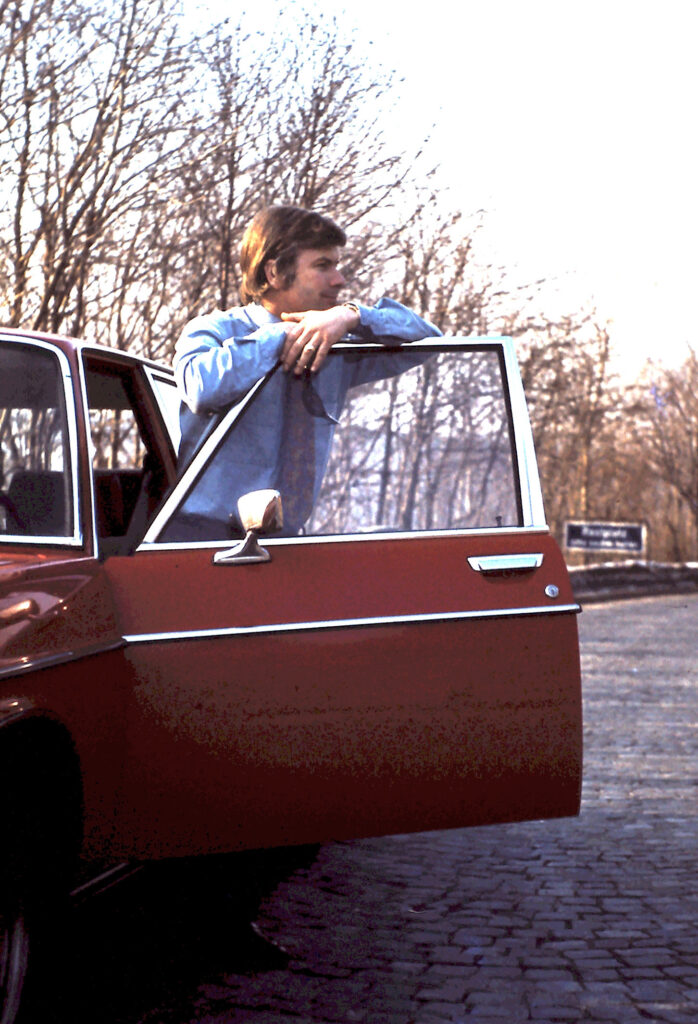
Before establishing The Marmalade Cat and dedicating our lives to printmaking, Norman Hunt’s career was rooted in the world of advanced research engineering.
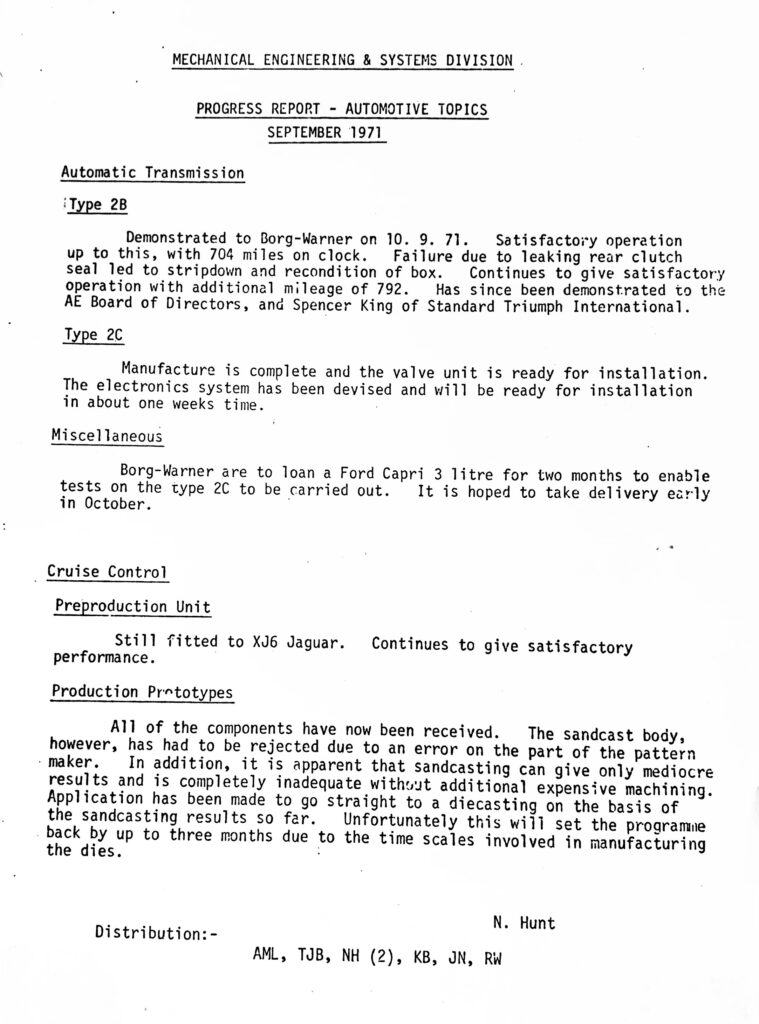
In the late 1960s and 1970s, working with Associated Engineering Developments (AED), Hunt faced a major engineering challenge: how to make automatic vehicle transmissions shift smoothly by precisely controlling hydraulic fluid pressure electronically. At the time, electrical valves were strictly binary—they were either fully open or fully closed.
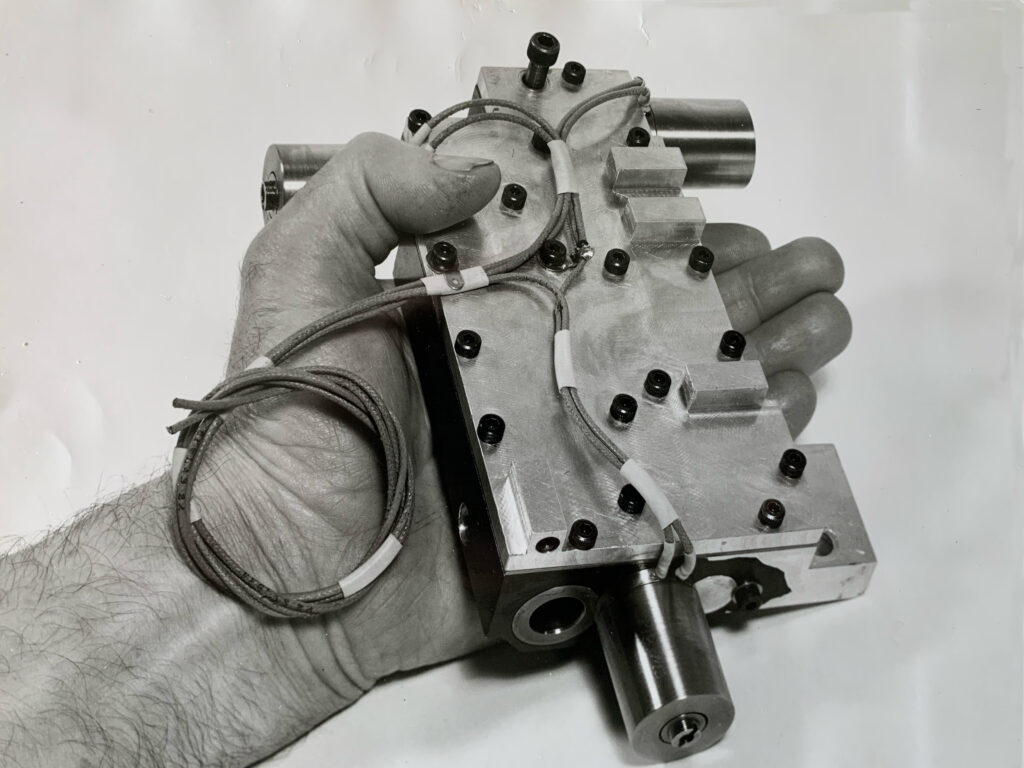
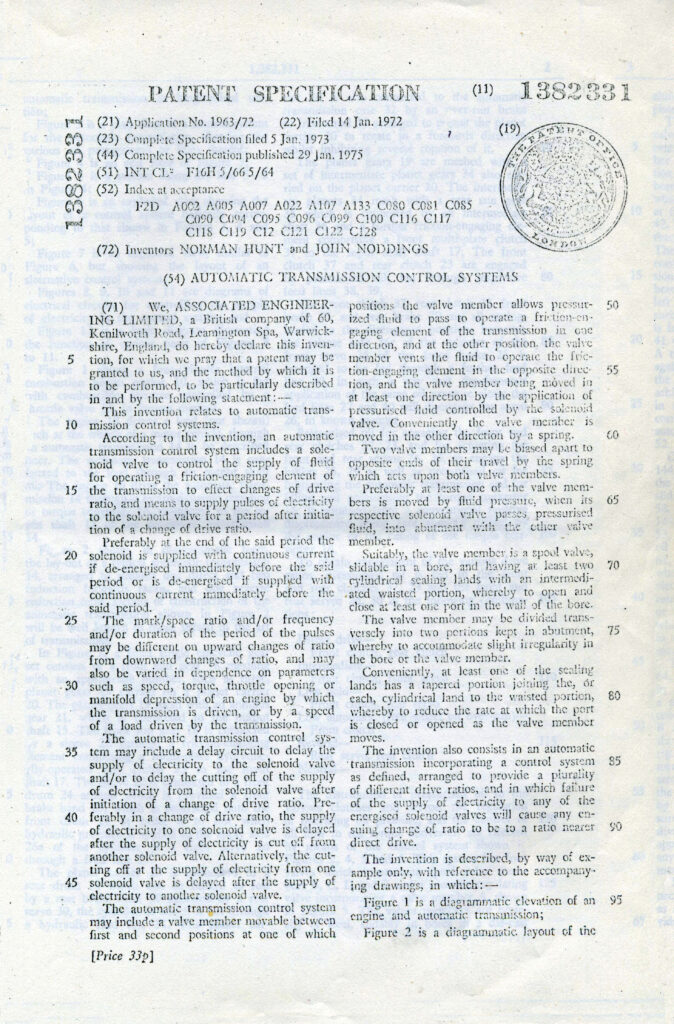
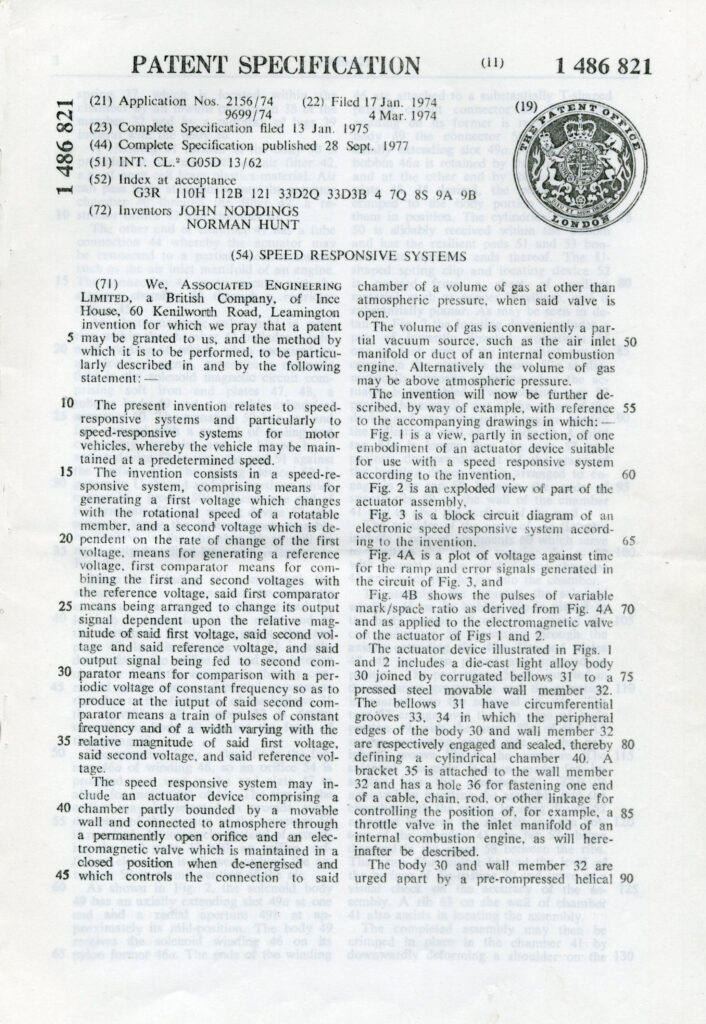
Hunt solved this by inventing a high-speed solenoid valve driven by a rapidly cycling electrical signal. By varying the “on” time of the pulses—a principle known as Pulse-Width Modulation (PWM)—a simple switch became a tool for flawless, proportional fluid control – the paradigm shift that finally gave electronics control over fluid power.
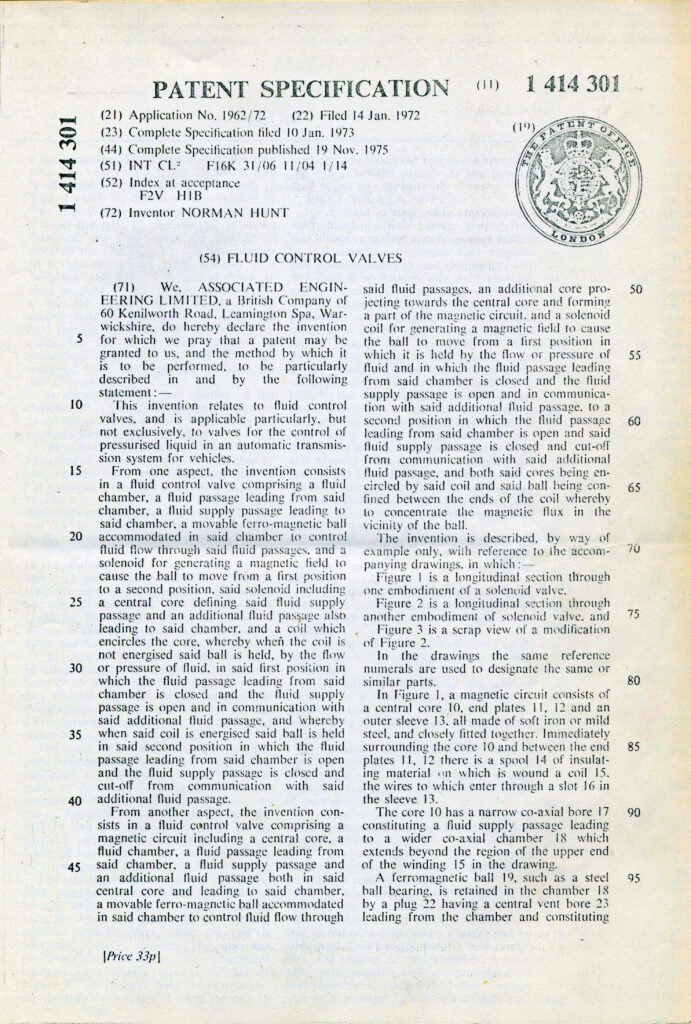
On 14 January 1972, Hunt filed the definitive patents for this breakthrough: UK Patent 1,414,301 (“Fluid control valves”) and UK Patent 1,382,331 (“Automatic transmission control systems”)
The Industry Crossroad
Though global automotive giants later built their modern electronic transmissions on this exact principle during the 1980s and 1990s, the concept originated in Hunt’s early 1970’s laboratory.
- 1971: A prototype of Norman Hunt’s “Autotrans” system was fitted to a vehicle and successfully demonstrated to engineers at BorgWarner and Spencer King of Triumph International.
- 1973: Full technical disclosures of the invention were formally provided to the leadership of BorgWarner, VW and BMW, together with the AED system built on their own platforms for them to evaluate.
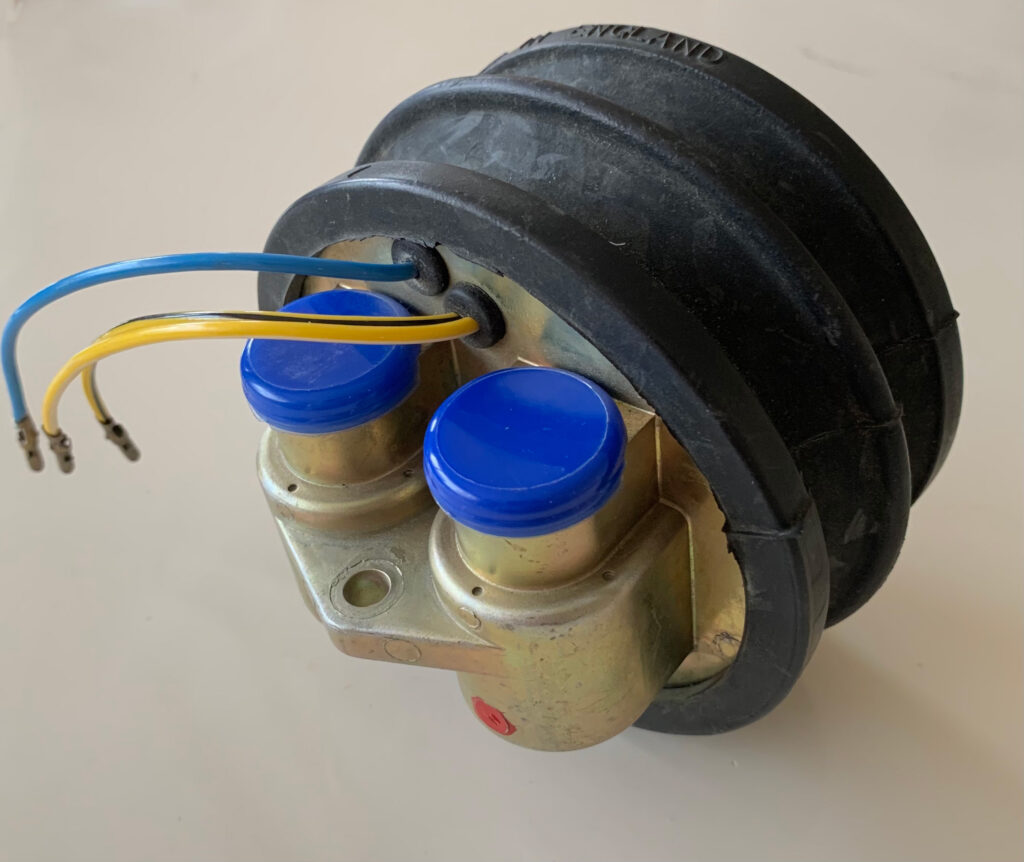
Hunt left AED in 1979 to pursue a lifetime of creative collaboration in printmaking. Today, the PWM solenoid valve is a silent backbone of global industry, produced in the hundreds of millions for a myriad of purposes.
The Society of Automotive Historians in Britain (www.thesahb.com) recently published an article documenting this work.
Or view the permanent archive on https://zenodo.org/records/21550737